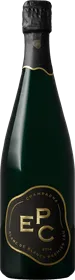
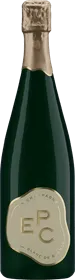
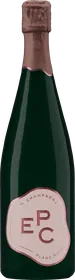
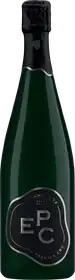
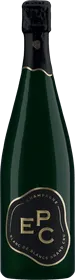
Champagne EPC: founders, partner growers and low dosages from a house in the Sézannais
Three founders, a house set apart from Épernay
Based in Vindey, in the southern part of the Marne vineyards of Champagne, the house of EPC was founded in 2019 by Édouard Roy, Jérôme Queige and Camille Jullien Gilardi. Rather than relying on a vineyard of its own, it draws on a network of growers spread from the Montagne de Reims to the Côte des Bar. Six years after its creation, in June 2025, EPC acquired the house of Charles Mignon in Épernay, which keeps its brand and remains run by the Mignon family.
One sector, one group of growers, one cuvée
At EPC, each cuvée comes from a single sector and is made by the growers of that sector in their own facilities, with the house setting the overall style. The Blanc de Blancs Brut is thus born in Bethon, the Blanc de Noirs Brut at a grower's estate in Buxeuil, and the Blanc de Blancs Grand Cru in Avize. The back label states the terroir, the harvest year and the growers behind the wine. From one bottle to the next, the range sketches a small map of the region.
No more than 6 g/L of sugar
No EPC cuvée exceeds 6 grams of sugar per litre, whereas the market average lies between 8 and 10 g/L depending on the house. According to EPC, the dosage liqueur (the blend of wine and sugar added after disgorgement) contains no sulphite solution, with sulphur still used during fermentation. Only the first pressing of the grapes goes into the blends. With so little sugar, what sets two bottles apart is place more than dosage.
Choosing an EPC champagne: aperitif, seafood, mealtime or cellaring
For an aperitif with friends
The Brut is the only blend in the range made from all three Champagne grape varieties, with Meunier predominating, and is crafted by a group of growers from the Épernay area. Ripe yellow fruit, a touch of iodine, a rich, velvety palate: it is the most crowd-pleasing cuvée. The Blanc de Blancs Brut, 100% Chardonnay from the hillsides of the Sézannais, is livelier, with citrus and apple notes. These two cuvées open the range, whose price gaps remain small up to the Grand Cru; only the Millésimé 2013 stands clearly apart.
With no added sugar, for seafood
The Blanc de Blancs Brut Nature is not dosed. Its grapes come from the Mont de Berru, a hill 7 km east of Reims, where Chardonnay grows on chalky slopes facing south-east, in the midst of an area devoted to Pinot Noir. It is the most tightly focused cuvée in the selection, tailor-made for oysters, raw fish or scallop tartare, and for lovers of brut nature.
To accompany a meal
The Blanc de Noirs Brut, 100% Pinot Noir, comes from the Côte des Bar, in the Aube. Its Upper Jurassic clay-limestone soils set it apart from the rest of the range, grown on Cretaceous chalk, and give it roundness and red fruit: it is the wine for the table. The Rosé, dominated by Chardonnay with Pinot Noir added, is lighter, with notes of raspberry, and pairs nicely with a salmon gravlax, a pairing suggested by the house.
To give as a gift or to cellar for a few years
A champagne from a young house for ageing? The Blanc de Blancs Grand Cru spends at least 48 months in the cellar before release and is dosed at just 4 g/L, placing it among the extra brut champagnes. Praline and hazelnut mark its palate, according to the house. For a more distinctive gift, the Millésimé 2013 offers ten years of ageing.
Blanc de Blancs, Premier Cru, Millésimé 2013: crus, reserve wines and cellar ageing at EPC
Three blanc de blancs, three chalk soils
EPC's three blanc de blancs are distinguished first and foremost by their origin. According to the house, the Sézannais gives the Blanc de Blancs Brut, on chalk mixed with marl and clay, a riper Chardonnay than in the north of Champagne. Berru brings the Brut Nature its precision, while Avize and Oger, two Grand Cru villages of the Côte des Blancs, give the Grand Cru its depth. Cellar ageing follows this progression: at least 36 months for the first two, 48 months for the Grand Cru, which also includes nearly a third of reserve wines.
Premier Cru, with two Grand Cru villages in the blend
The Brut Premier Cru brings together roughly two thirds Chardonnay and one third Pinot Noir from five villages: Vertus and Bergères-lès-Vertus in the south of the Côte des Blancs, Cumières in the Marne Valley, and Bouzy and Ambonnay on the Montagne de Reims. Bouzy and Ambonnay are classified Grand Cru, but a blend carries the designation of the lowest-ranked cru, hence the Premier Cru label. A majority of reserve wines, part of them kept in foudres (large wooden vats), and more than six years on lees add brioche and dried fruit to a lemony, iodine-tinged structure.
The Millésimé 2013, the only wine without malolactic fermentation
The Blanc de Blancs Millésimé 2013 is a 100% Chardonnay from the Premier Cru village of Vertus, crafted by growers from the village. All the other EPC cuvées undergo malolactic fermentation, in whole or in part, the transformation of malic acid into softer lactic acid. The Millésimé 2013 avoids it and retains a lively acidity, which ten years in the cellar have wrapped in honey and candied fruit, with a saline finish.