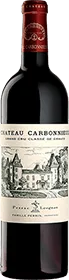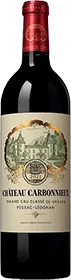


Château Carbonnieux 2010
Only 1 available
In-Stock
Marks and reviews
 Parker
 J. Robinson
 Wine Spectator
 R. Gabriel
 J. Suckling
Description
Characteristics and tasting advice for Château Carbonnieux 2010
Tasting
Color
The color displays a deep ruby-red hue, enhanced by intense violet highlights that gradually evolve toward garnet and brick tones at the rim.
Nose
The bouquet reveals remarkable aromatic complexity, unfolding notes of unsmoked tobacco, roasted herbs, and lavender. Aromas of kirsch, blackcurrant, and dark fruits mingle with hints of toast and cedar. With aeration, the nose develops nuances of white pepper, clove, and fresh herbs that underscore the classic elegance of the appellation.
Palate
The attack is smooth and velvety, before opening into a generous, full-bodied palate. The dense, concentrated texture is supported by silky, refined tannins that are perfectly integrated. Flavors of red and black fruits (blackcurrant, blackberry, cherry) harmonize with toasty notes from aging in French oak barrels. The long, persistent finish leaves an impression of freshness, with spicy notes and vibrant red fruit, accompanied by subtle touches of tobacco and minerality.
Food and wine pairings
This wine pairs ideally with grilled or roasted red meats, notably ribeye steak and leg of lamb. It also matches perfectly with game dishes such as pheasant or venison, as well as recipes featuring wild mushrooms. Aged hard cheeses also make a harmonious pairing.
Serving and cellaring
Château Carbonnieux Rouge 2010 can be enjoyed now and will continue to evolve through around 2030. It is best served at a temperature of 16 to 18°C. Decanting for one hour will allow it to fully express its aromatic complexity.
A lively and elegant Grand Cru Classé from Pessac-Léognan
The estate
Acquired in 1956 by the Perrin family, Château Carbonnieux is located in Pessac-Léognan, in the Graves area of Bordeaux. Classified as a Grand Cru de Graves since 1959, the estate covers 100 hectares in a single block, divided into 119 plots, 45% of which are dedicated to white wines, the true signature of the estate. Today, Philibert Perrin and Marc Perrin, representing the fourth generation, run the estate with a modern approach, favoring low-sulfur viticulture without organic certification.
The vineyard
The Château Carbonnieux vineyard benefits from an outstanding terroir located at the top of a gravelly ridge in Pessac-Léognan. The soils are composed of deep Garonne gravels resting on clay-limestone subsoils, providing optimal drainage and natural water regulation. This mosaic of terroirs allows a precise expression of each grape variety, with Cabernet Sauvignon planted on the most free-draining gravels and Merlot on slightly cooler areas. The estate practices eco-responsible viticulture, certified Haute Valeur Environnementale since 2017.
The vintage
The 2010 vintage is considered exceptional in Bordeaux. After a mild winter, the season was marked by a particularly dry summer and moderate temperatures, creating ideal conditions for optimal ripening. Generous, consistent sunshine enabled Cabernet Sauvignon to reach perfect physiological ripeness while preserving the hallmark freshness of Pessac-Léognan. The Merlots developed beautiful concentration while retaining their tannic structure. This climatic combination produced wines of remarkable intensity, with exceptional balance and considerable aging potential.
Winemaking and aging
The harvest for Château Carbonnieux Rouge 2010 was carried out by hand over an extended period, with rigorous grape sorting on a selection table. Parcel-by-parcel vinification took place in temperature-controlled stainless-steel tanks, with pump-overs and punch-downs to gently extract tannins. Maceration lasted between three and four weeks. After alcoholic fermentation, malolactic fermentation took place in tank before blending. Aging of Château Carbonnieux Rouge 2010 continued for 16 to 18 months in French oak barrels, 35 to 40% new wood, allowing harmonious integration of oak notes without masking the expression of fruit and terroir.
Grape varieties
Cabernet Sauvignon (65%)
Merlot (30%)
Cabernet Franc (5%)