Assistant


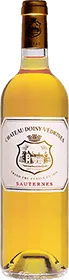
Château Doisy-Védrines : Chevalier de Védrines 2025
En Primeur Wines – delivery in early 2028
Let's talk about this product!
A pairing in mind? A question about the vintage? Comparison with another product? Find the answers here...
Description
Tasting notes and characteristics of Chevalier de Védrines 2025 by Château Doisy-Védrines
Tasting
Appearance
A bright, crystal-clear yellow hue, enhanced by delicate silvery highlights.
Nose
The bouquet reveals great delicacy, offering a lovely aromatic intensity dominated by elegant floral notes and subtle hints of yellow-fleshed fruits.
Palate
The attack is lively and full of freshness. It then unfolds all the smoothness, complexity and aromatic finesse characteristic of Sémillon. Citrus flavours gradually emerge before extending into a persistent mineral finish.
Food and wine pairing
This white wine will pair beautifully with delicate shellfish, such as langoustines prepared with a touch of saffron.
Serving and ageing
To fully appreciate this vintage, it is recommended to serve it chilled at a temperature between 9 and 10°C. It has an ageing potential allowing it to be kept in the cellar until around 2032.
The elegance of a Dry White Bordeaux by Château Doisy-Védrines
The estate
Located in Barsac, around forty kilometres from Bordeaux, Château Doisy-Védrines is an illustrious Second Growth classified in 1855. While its buildings date back to the 16th century, the 51-hectare estate truly came into its own when it was acquired in 1846 by the Castéja family. Today, the estate is run by Guillaume Lefebvre, under the stewardship of Olivier Casteja.
The vineyard
The grapes come from the prestigious Haut-Barsac terroir, renowned for producing great Dry White Bordeaux. The vines, with an average age of 35 years, thrive on a beautiful ridge composed of red clay and fine gravel, resting on a subsoil of starfish-rich limestone plateau. This unique geology naturally gives the berries great purity and remarkable elegance.
Vinification and ageing
The making of Chevalier de Védrines 2025 begins with entirely manual harvesting within the estate's plots. Once in the cellar, the bunches undergo gentle pneumatic pressing. The must then ferments in stainless steel tanks. Finally, the wine benefits from partial ageing in oak barrels, enhanced by regular bâtonnage on the lees, which gives it its smooth texture and complexity. Alcohol content: 13.5% vol.
Grape varieties
This wine is made from a blend of 60% Sémillon and 40% Sauvignon.