Assistant


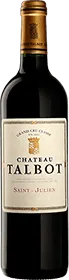
Château Talbot 2025
En Primeur Wines – delivery in early 2028
Let's talk about this product!
A pairing in mind? A question about the vintage? Comparison with another product? Find the answers here...
Description
Characteristics and tasting notes of Château Talbot 2025
Tasting
Appearance
This vintage reveals a deep, intense purplish-red colour, reflecting its remarkable concentration.
Nose
The aromatic intensity unfolds through scents of blackcurrant intertwined with notes of dried flowers and fresh herbs such as rosemary and basil.
Palate
The attack is broad and supple, introducing a creamy texture. The wine displays great elegance with refined, ripe tannins. The polished finish lingers on aromas of black berries accompanied by a delicate touch of chalk, highlighting a beautiful minerality.
Food and wine pairings
This cuvée will be particularly enjoyable with noble red meats. It will pair wonderfully with roast lamb with herbs, a fine grilled cut of beef, duck with mushrooms or a veal stew.
Serving and cellaring
This great classic wine requires a little patience to reveal its full potential. It will be enjoyed at its best between approximately 2028 and 2055.
A fresh and elegant Saint-Julien wine crafted by Château Talbot
The estate
Located in the renowned region of Bordeaux, Château Talbot was founded in the 18th century and elevated to 4ème Grand Cru Classé in 1855. Acquired in 1917 by Désiré Cordier, it is now run by the Bignon-Cordier family, with Nancy Bignon-Cordier at the helm. The estate stands out for its vast single-block vineyard and its state-of-the-art facilities inaugurated for the family's centenary. The property is renowned for its environmental commitment and the consistent quality of its wines.
The vineyard
The exceptional terroir of the Saint-Julien appellation extends over gentle slopes of fine Médoc gravel resting on a clay bedrock. Rising to 23 metres in altitude, the estate's vineyard forms a single block, benefiting from ideal natural drainage. The vines, averaging 43 years of age, are planted at a density of 7,700 vines per hectare. They are trained using the double Guyot pruning method, accompanied by traditional ploughing. The estate is certified Haute Valeur Environnementale level 3, recognising its sustainable practices.
Winemaking and ageing
After hand harvesting, the berries undergo successive sorting, both manual and optical, to keep only the finest fruit. Vinification then takes place in wooden vats. Finally, the wine benefits from careful ageing for 15 months in barrels, 60% of which are new oak. Alcohol content: 13% vol.
Grape varieties
74% Cabernet Sauvignon, 17% Merlot and 9% Petit Verdot.