

 Guaranteed provenanceDirect from the estates
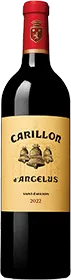
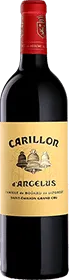
Carillon d'Angelus 2025
En Primeur Wines – delivery in early 2028
Description
Characteristics and tasting notes of Carillon d'Angelus 2025
Tasting
Appearance
This wine reveals a deep, vibrant colour, displaying hues ranging from ruby to intense purple, a testament to its excellent ripeness.
Nose
The aromatic bouquet shines through its remarkable purity. It releases crisp notes of red and black fruits such as cherry, raspberry and blackberry. This fruit-driven profile is enhanced by delicate floral hints reminiscent of violet, sweet spices, as well as subtle woody touches evoking cedar, dark chocolate and vanilla.
Palate
On the palate, the Merlot unfolds beautiful roundness and a silky texture. The tannic structure proves particularly fine, silky and velvety. Perfectly balanced by a fitting acidity, the tasting extends towards an elegant finish, marked by the persistence of fruit and ageing nuances.
Food and wine pairings
This cuvée pairs wonderfully with flavourful red meats such as a fine cut of beef or roast lamb. It also brilliantly accompanies characterful poultry, white meats served with mushrooms, or roasted root vegetables. To conclude the meal, opt for hard or semi-hard cheeses, such as a young Comté or a Saint-Nectaire.
Serving and cellaring
To fully appreciate Carillon d'Angelus 2025, it is recommended to serve it at a temperature between 16 and 18°C. In its youth, decanting one to two hours before tasting will be beneficial. This vintage offers an ideal drinking window between approximately 2028 and 2038.
The elegance of a second wine from Saint-Émilion crafted by Château Angelus
The estate
Anchored in the renowned region of Bordeaux, Château Angelus is inseparable from the de Boüard de Laforest family, who have been present on these lands since the 18th century. The estate officially took its name during the 19th century. Today, Stéphanie de Boüard-Rivoal heads this prestigious property, which spans 131 hectares including 62 hectares in Saint-Émilion. Having become a true internationally renowned reference, the estate stands out through its amphitheatre-shaped terroir and its commitment to sustainable viticulture, while preserving the family heritage.
The vineyard
The grapes destined for this second wine come from a dedicated area of 21 hectares in the heart of the Saint-Émilion appellation. The vines, planted at a density of 6,500 to 8,500 plants per hectare, thrive on a mosaic of three terroirs: cool, late-ripening clays, warmer clay-sandy-limestone soils, as well as more free-draining and early-ripening plots. Pruning is meticulously adapted to the vigour of each plant and to the soil type, with the utmost respect for the flow of sap. Harvesting is carried out by hand, guided by berry tasting to ensure optimal ripeness.
The vintage
A mild winter followed by a cool, sunny spring laid the foundations for an exceptional vintage, providing the vines with ideal nourishment conditions. The summer, marked by a few beneficial rains and two heatwaves, favoured small berries with rich skins, a guarantee of concentration and finesse. This vintage, with its assertive style and rarely seen in Bordeaux, is the result of a generous climate perfectly mastered by the winemaker.
Winemaking and ageing
2025 is the first vintage produced in the estate's new cellar. The berries are vatted by gravity in inverted truncated stainless steel tanks. The process begins with a pre-fermentation maceration at 8°C, followed by alcoholic fermentation carried out up to 28°C. A post-fermentation maceration of one to three weeks at 28-30°C perfects the extraction. Transfer to barrel is carried out half during the racking and half after malolactic fermentation. Finally, the wine benefits from 16 to 18 months of ageing in fine-grained French oak barrels with medium toasting, split between 60% new barrels and 40% one-wine barrels.
Grape varieties
90% Merlot and 10% Cabernet Franc.