

 Guaranteed provenanceDirect from the estates
 DeliveryFree for purchases over 3,315 SEK
- Secure PaymentVisa, American Express, Mastercard...
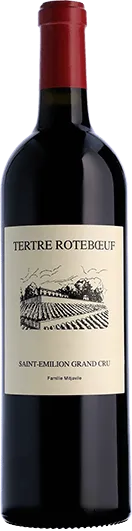
Château Tertre Roteboeuf 1997
Stock currently at the producing estate – Will ship after 14 October 2026
Description
Characteristics and tasting advice for Château Tertre Roteboeuf 1997
Tasting
Color
The wine displays a garnet hue typical of a wine that has reached maturity.
Nose
The nose reveals fine aromatic complexity with notes of mocha, coffee and chocolate, accompanied by nuances of cedar and jammy black and red fruits. Aromas of espresso, fig and black cherry add depth to the bouquet, while tertiary hints of earth, stone and minerality bring an extra dimension.
Palate
On the palate, this wine shows as medium- to full-bodied, with moderate acidity and a silky, velvet-like texture. The palate offers excellent fruit, a supple structure and a long, lingering finish with aromas of sweet cherry, raspberry, earth and licorice.
Food and wine pairings
This Château Tertre Roteboeuf 1997 pairs perfectly with roasted leg of lamb served with melting potatoes, simply prepared red meats, or game. It also enhances refined dishes such as poached eggs with truffle or recipes featuring noble mushrooms.
Serving and cellaring
It is recommended to serve this wine at a temperature between 16 and 18°C. One hour of decanting will allow its aromas to fully express themselves.
The richness and structure of a Saint-Émilion wine
The estate
Located in Saint-Laurent-des-Combes in the Saint-Émilion appellation, Château Tertre Roteboeuf covers 6 hectares of vineyard on south/southeast-facing clay-limestone hillsides. Taken over in the late 1970s by François Mitjavile, who now runs the estate with his wife Émilie, the property produces around 27,000 bottles per year. The singularity of this Bordeaux wine lies in its artisanal viticulture: very low-trained vines, grass cover, late hand-harvesting, fermentation without added yeasts and extended aging in new barrels, revealing the most accomplished expression of the wines from Bordeaux’s hillsides.
The vineyard
The vineyard of Château Tertre Roteboeuf extends over about 6 hectares of sloping clay-limestone hillsides, with a due south to southeast exposure, in the southeastern sector of the Saint-Émilion appellation. This distinctive terroir, located near Château Pavie, is characterized by dry soils parched by summer heat. The vines, with an average age of 40 years, are managed with a particular approach: permanent grass cover and low pruning that allows the grapes to benefit from the warmth radiated by the soil. Planting density reaches around 6,000 to 7,000 vines per hectare, with yields deliberately limited to a maximum of 36 hectoliters per hectare.
The vintage
The 1997 vintage in Bordeaux proved complex and contrasting. An exceptionally warm March triggered early but uneven flowering. June and July brought heat and humidity, encouraging the development of fungal diseases. August saw near-tropical conditions, with significant rainfall from August 25 to September 1 that swelled the berries with water. Fortunately, September delivered mostly warm, sunny weather, allowing diligent producers to salvage the harvest. The Right Bank, and Saint-Émilion in particular, performed better than the Médoc, with Merlot showing strong resilience in the face of climatic challenges.
Vinification and aging
The Château Tertre Roteboeuf 1997 harvest was carried out by hand, with rigorous selection of berries at optimal ripeness. Vinification took place in concrete vats with high fermentation temperatures reaching around 35°C, using exclusively indigenous yeasts. Malolactic fermentation took place in barrels. Aging continued for 22 to 24 months in new fine-grain French oak barrels from the Radoux cooperage, with medium to long toast. The non-air-conditioned cellars, kept between 16 and 20°C, encouraged the wine’s gradual oxidative maturation.
Grape varieties
Merlot (80 %)
Cabernet franc (20 %)