

 Guaranteed provenanceDirect from the estates
 DeliveryFree for purchases over 3,315 SEK
- Secure PaymentVisa, American Express, Mastercard...
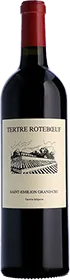
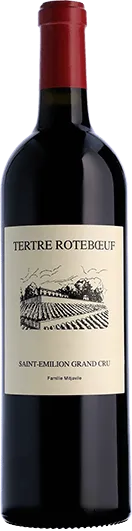
Château Tertre Roteboeuf 2003
Stock currently at the producing estate – Will ship after 14 October 2026
Description
Characteristics and tasting advice for Château Tertre Roteboeuf 2003
Tasting
Appearance
The wine displays a deep ruby-red hue with purple highlights, with a noticeable evolution at the rim of the glass attesting to the wine’s maturity.
Nose
The bouquet is generous and expressive, unveiling aromas of dark chocolate and black cherry liqueur. Notes of Indian spices, vanilla and red fruits round out this aromatic profile. With aeration, nuances of licorice, figs and roasted coffee enrich the olfactory palette, a hallmark of barrel aging.
Palate
The attack is supple and enveloping, revealing flavors of black cherry, spice, coffee and melted chocolate. The texture charms with its silky, sensual character, carried by refined, delicate tannins. The palate unfurls a fine concentration of ripe fruit, with hints of wild strawberry, cherry and raspberry. The finish is of moderate length with a slight drying sensation, reflecting a tannic structure that remains clearly present despite the richness of the vintage.
Food and wine pairings
This Château Tertre Roteboeuf 2003 pairs beautifully with refined dishes such as poached eggs with truffle or feathered game. It also accompanies roasted red meats with elegance, spiced duck, and aged cheeses such as Saint-Nectaire.
Serving and cellaring
It is recommended to serve Château Tertre Roteboeuf 2003 at a temperature between 16 and 18°C. Decanting for two to three hours before serving will allow the wine to fully express its aromatic complexity. This vintage has reached its optimal drinking window and can be enjoyed until around 2035, although extended aging is not recommended.
A sun-kissed, refined Saint-Émilion by François Mitjavile
The estate
Created in 1978, Château Tertre Roteboeuf is a small Bordeaux estate located in Saint-Émilion, in the commune of Saint-Laurent-des-Combes. The property covers around 6 hectares of south to southeast-facing clay-limestone slopes. Run by the Mitjavile family—François, his wife Miloute, and their children Louis and Nina—it is planted with 80% Merlot and 20% Cabernet Franc.
The vineyard
The Château Tertre Roteboeuf vineyard enjoys an exceptional setting on the southern slope of Saint-Émilion, in a natural amphitheater offering ideal exposure. The clay-limestone soils, characteristic of this southern part of the Saint-Émilion plateau, give the wine its structure and distinctive minerality. The vines, averaging more than forty years old, drive their roots deep into the terroir, enabling access to the underground water reserves. Vineyard management favors intensive viticultural practices, with permanent grass cover and low vine pruning, encouraging extremely ripe grapes.
The vintage
The year 2003 remains one of the hottest vintages in the recent history of Bordeaux. After a wet winter that replenished water reserves, spring proved exceptionally hot and dry, with a record-breaking March. Summer saw extreme temperatures, notably in August, when eleven consecutive days exceeded 35°C. Despite these challenging conditions, timely rains in mid-August helped cool the vines. These climatic circumstances produced grapes of exceptional ripeness, with remarkable concentration in sugars and phenolic compounds, giving rise to very ripe wines with aromas of roasted black fruits, spice and truffle.
Winemaking and aging
The Château Tertre Roteboeuf 2003 harvest was carried out by hand at optimal ripeness, with rigorous berry selection. Winemaking took place with temperature-controlled fermentations, pushed to high levels approaching 35°C to optimize extraction and aromatic complexity. Fermentations were conducted with the estate’s indigenous yeasts. Aging continued for twenty-two months in oak barrels in cellars at ambient temperature. Frequent rackings were performed during this period to encourage the wine’s harmonious evolution and integration. Château Tertre Roteboeuf 2003 was bottled with minimal intervention, thus preserving the authenticity of the vintage’s expression.
Grape varieties
Merlot (85%)
Cabernet Franc (15%)