Assistant



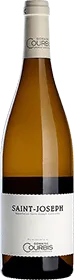
Domaine Courbis : Champelrose 2023
In-Stock
Let's talk about this product!
A pairing in mind? A question about the vintage? Comparison with another product? Find the answers here...
Description
Characteristics and tasting notes of the Champelrose 2023 by Domaine Courbis
Tasting notes
Appearance
Beautiful ruby colour.
Nose
Highly expressive, it reveals floral aromas of violet and peony, complemented by notes of red fruits and a hint of pepper.
Palate
Round and supple, it offers a texture characteristic of the appellation, supported by grainy tannins.
Food and wine pairings
This wine pairs perfectly with grilled or roasted red meats, dishes in sauce, as well as regional specialities such as lamb or vegetable gratins. It also goes very well with hard cheeses.
Serving and cellaring
To fully appreciate this wine, it is recommended to serve it at a temperature between 16 and 18 °C. Decanting for one to two hours prior to tasting is recommended in order to release all its aromas.
The elegance of a Cornas Syrah crafted by Domaine Courbis
The estate
Located in the Rhône Valley, in Châteaubourg, Domaine Courbis traces its origins back to the 17th century, but took its modern form in the late 1980s under the leadership of brothers Dominique and Laurent Courbis, the current owners. At the head of a vineyard of approximately 40 hectares, they cultivate prestigious terroirs. This renowned family estate stands out for its technical rigour and its respect for the steep hillsides. The estate has today established itself as an essential signature, producing wines that combine power and precision.
The vineyard
This wine comes from the Cornas appellation, on the right bank of the river. The vines, planted on hillsides, benefit from an exceptional microclimate. The terroir consists of a granitic arena with poor, well-draining soils of granitic sands. The area dedicated to this cuvée is 5 hectares, including a plot of about fifteen years old and 2.5 hectares of very old vines planted in 1919.
Winemaking and aging
The grapes are harvested by hand in small crates, followed by rigorous sorting and complete destemming. Fermentation takes place in temperature-controlled stainless steel tanks to preserve freshness, with malolactic fermentation carried out before barrel ageing. Ageing lasts 15 months in barrels of two to four wines, then concludes with 3 months in stainless steel tanks during the winter preceding bottling.
Grape variety
Syrah (100%).