Assistant


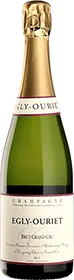
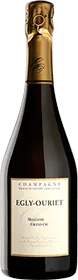
Egly-Ouriet : Grand Cru Brut Millésimé 2008
Only 1 available
In-Stock
Let's talk about this product!
A pairing in mind? A question about the vintage? Comparison with another product? Find the answers here...
Description
Characteristics and tasting advice for the Grand Cru Brut Millésimé 2008 from Egly-Ouriet
Tasting
Appearance
The wine displays a bright golden hue, lifted by fine, delicate bubbles that linger elegantly in the glass.
Nose
The nose reveals remarkable complexity, with aromas of orchard fruits (pear, apple) and citrus (Meyer lemon, lemon oil). With aeration, secondary notes of praline, toasted almonds and freshly baked bread emerge, accompanied by subtle touches of walnut, nougat and honey.
Palate
On the palate, this champagne stands out for its broad, deep structure. The palate reveals remarkable concentration with notes of citrus (lemon, grapefruit) and white fruits, supported by bright, racy acidity. The creamy, silky texture contrasts elegantly with the chalky minerality characteristic of the Ambonnay terroir. The exceptionally long, precise finish highlights outstanding aging potential.
Food and wine pairings
This exceptional champagne pairs beautifully with delicate fish, fine shellfish, refined poultry and aged cheeses. Its structure and complexity also allow it to elevate elaborate gastronomic dishes.
Serving and aging
The Grand Cru Brut Millésimé 2008 is best enjoyed at a temperature between 8 and 10°C. This champagne can be enjoyed now and will continue to evolve positively until around 2048, offering an exceptional tasting window spanning several decades.
An Ambonnay champagne at the pinnacle of Champagne excellence
The estate
Founded in 1980 by Francis Egly, a fourth-generation winegrower, Egly-Ouriet is now regarded as one of Champagne’s absolute benchmark producers. Based in Ambonnay, this family-owned, independent estate spans twenty hectares, including ten hectares classified as Grand Cru. Francis Egly transformed the Champagne approach by prioritizing full grape ripeness, extended aging on lees, and environmentally respectful viticulture. With an annual production of around 100,000 bottles and reserves of 700,000 bottles in the cellar, Egly-Ouriet embodies the excellence of the grower-Champagne movement and ranks among the most sought-after producers in the world.
The vineyard
This Grand Cru Brut Millésimé 2008 comes exclusively from Grand Cru plots located in Ambonnay, an emblematic village of the Montagne de Reims in Champagne. The vines, with an average age exceeding forty years, are rooted in clay-limestone soils rich in chalk, with southern or south-eastern exposure. These exceptional terroirs, notably the legendary Les Crayères plot planted in 1946-1947, benefit from optimal exposure that promotes full ripeness in the grapes. Vineyard management follows strict organic principles, with no pesticides, regular ploughing, leaf thinning and late hand-harvesting to achieve exceptional levels of ripeness.
The vintage
The 2008 vintage in Champagne stands out as one of the greatest in recent years. Ideal ripening conditions, with the return of sunshine during the crucial pre-harvest and picking periods, produced perfectly ripe grapes while maintaining remarkable freshness and acidity. This rare combination of maturity and vibrancy places 2008 alongside historic vintages such as 1988, 1989 and 1990, all renowned for their exceptional aging potential.
Winemaking and aging
Following late hand-harvesting, the grapes for the Grand Cru Brut Millésimé 2008 were gently pressed in refrigerated presses to preserve freshness. Fermentation took place half in French oak barrels from Dominique Laurent cooperage (one to five years old) and half in stainless-steel tanks, using indigenous yeasts. Malolactic fermentation was deliberately blocked to preserve acidity and mineral tension. After eight to ten months of aging in barrel, the wine was bottled late, in July, for natural clarification. The champagne then benefited from exceptional aging on lees for nearly eleven years before disgorgement in July 2019, receiving a minimal dosage of 5 g/L to respect the pure expression of the terroir.
Grape varieties
Pinot noir (70 %)
Chardonnay (30 %).