Assistant


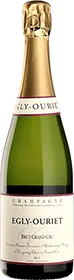
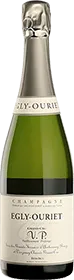
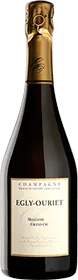
Egly-Ouriet : Grand Cru Brut Millésimé 2016
In-Stock
Let's talk about this product!
A pairing in mind? A question about the vintage? Comparison with another product? Find the answers here...
Description
Tasting Notes and Advice for Egly-Ouriet Grand Cru Brut Vintage 2016
Tasting
Appearance
The wine shows a deep, bright golden yellow color with amber highlights.
Nose
The bouquet is complex and layered, opening on notes of fresh bread, peach, and green apple intertwined with dried white flowers. With aeration, the nose evolves toward aromas of toasted nuts—especially almonds and hazelnuts—along with touches of honey, brioche, subtle vanilla, and green tea.
Palate
On the palate, the champagne unfolds with precision and definition, revealing a rich, full texture while retaining a vibrant acidic backbone and an abundant chalky extract that bring structure and freshness. Layers of concentrated fruit are balanced by savory, earthy nuances. The mousse is remarkably fine and integrates harmoniously. The finish is long and precise, lingering on persistent chalky minerality and a slight black pepper note.
Food and Wine Pairings
This Grand Cru Brut Vintage 2016 pairs perfectly with shellfish such as crab and lobster, dishes in white sauce, as well as French-style roasted white meats. Its richness and structure also allow it to match well with aged cheeses showing chalky, mineral character.
Serving and Cellaring
The Grand Cru Brut Vintage 2016 can be enjoyed now and will continue to evolve until around 2056.
The structure and elegance of an Ambonnay champagne
The estate
Founded in 1945 when Francis Egly’s grandfather acquired three hectares of vines in Ambonnay, the Egly-Ouriet estate expanded thanks to the marriage to Madame Ouriet, who brought an additional nine hectares, including the legendary Les Crayères vineyard. Francis Egly, representing the fourth generation, took the helm in 1980 and radically transformed the operation by deciding to vinify and market the entire production under the Egly-Ouriet name. A pioneer of the grower-producer movement, he converted the estate to organic and biodynamic viticulture, adopting practices that were then uncommon in Champagne. Today, the estate totals around ten hectares across the Grands Crus of Ambonnay, Bouzy, and Verzenay, along with two hectares in Premier Cru in Vrigny. Francis Egly, together with his daughter Clémence, who represents the fifth generation, is recognized as one of Champagne’s most meticulous growers, producing wines of consistent excellence that place Egly-Ouriet at the very top of the region’s quality hierarchy.
The vineyard
The Grand Cru Brut Vintage 2016 comes exclusively from the Grand Cru vineyards of Ambonnay. The plots benefit from optimal south and south-east exposures on chalk soils covered with clay-limestone layers, creating exceptional conditions for growing pinot noir. The average vine age reaches 40 years, with some parcels planted as far back as 1946. The estate practices certified organic and biodynamic viticulture, with regular mechanical plowing, green harvesting to control yields, and a complete absence of chemical inputs. Late harvesting makes it possible to obtain grapes at full physiological ripeness.
The vintage
The 2016 vintage is widely recognized as one of the greatest of the 2010s decade in Champagne. After challenging conditions early in the season, August and September brought warm, dry weather that enabled optimal grape ripeness. Natural acidity was perfectly preserved, creating ideal conditions for producing wines of exceptional complexity with remarkable aging potential.
Winemaking and aging
The Grand Cru Brut Vintage 2016 was entirely vinified in old French oak barrels from Burgundy cooper Dominique Laurent. Fermentations were carried out with indigenous yeasts. Malolactic fermentation was avoided in order to preserve natural acidity, freshness, and the expression of the terroir. The champagne then benefited from extended aging on fine lees in bottle for at least four years before disgorgement. Dosage was kept to a minimal level of 1 gram per liter, allowing the fruit character and the terroir’s chalky minerality to express themselves fully.
Grape varieties
Pinot noir (70%)
Chardonnay (30%)