Assistant



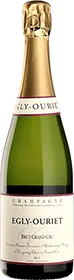
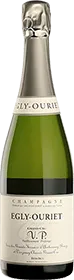
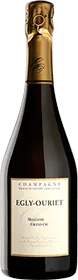
Egly-Ouriet : Grand Cru Brut Millésimé 2012
In-Stock
Let's talk about this product!
A pairing in mind? A question about the vintage? Comparison with another product? Find the answers here...
Description
Tasting characteristics and advice for Egly-Ouriet’s Grand Cru Brut Millésimé 2012
Tasting
Color
The wine displays a pale golden-yellow hue with greenish highlights, characteristic of a moderately aged Champagne protected from oxidation.
Nose
The bouquet reveals remarkable aromatic complexity, combining herb-butter notes with lemon and lime, lifted by touches of verbena. Deeper aromas of fresh stone fruit, praline and freshly baked bread follow, reflecting extended aging on the lees.
Palate
On the palate, this Champagne stands out for its exceptional concentration and precision. The palate unfolds a full spectrum of citrus, accompanied by white pepper and aromatic herbs. The mineral finish lingers at length with a distinctive salinity that mirrors Ambonnay’s chalky soils. Overall, it combines power and texture with remarkable freshness and vibrant acidity, extended by a persistent length with mineral nuances.
Food and wine pairings
This Grand Cru Brut Millésimé 2012 pairs beautifully with delicate fish, refined seafood, fine poultry and aged cheeses.
Serving and cellaring
The Grand Cru Brut Millésimé 2012 is best enjoyed at a temperature between 8 and 10°C. This Champagne has exceptional aging potential and can be cellared until around 2045 under optimal conditions.
A Grand Cru Champagne combining power and mineral precision
The estate
Founded in 1945, the Egly-Ouriet estate is now established as one of Champagne’s benchmarks. Francis Egly, who took over the estate in 1982, transformed the family approach by ending all grape sales to négociant houses to focus exclusively on crafting his own cuvées. A pioneer of the grower-producer movement, he farms around 20 hectares of vines, mainly across the Grand Crus of Ambonnay, Bouzy and Verzenay in the Montagne de Reims. His philosophy draws inspiration from Burgundy’s greatest estates, favoring an authentic expression of terroir, fully ripe harvests and extended aging. Renowned for meticulous precision and uncompromising standards, Francis Egly has earned the highest distinction of three stars in La Revue du Vin de France’s ranking. His children, Clémence and Charles, now work alongside him, preparing the fifth generation.
The vineyard
The Grand Cru Brut Millésimé 2012 comes exclusively from parcels located in the Grand Cru village of Ambonnay, in the heart of the Montagne de Reims in Champagne. The vines, averaging 40 years of age, benefit from a south and southeast exposure particularly favorable for optimal Pinot Noir ripening. The terroir is defined by chalk soils covered with clay, providing natural drainage and a mineral constraint that concentrates aromas and lends the wines their hallmark tension. Vineyard management follows principles inspired by organic farming, with regular plowing, no synthetic chemical products, and deliberately limited yields to prioritize quality. Harvesting is carried out by hand at full physiological ripeness, reaching exceptionally high natural sugar levels for the region.
The vintage
The year 2012 proved complex and demanding for Champagne growers. Contrasting weather conditions required rigorous vineyard management and constant attention to achieve optimal ripeness while preserving the grapes’ freshness and complexity. Despite these climatic challenges, Francis Egly’s technical mastery and unwavering commitment made it possible to obtain fruit of remarkable quality, authentically expressing the character of Ambonnay’s terroir.
Vinification and aging
The grapes for the Grand Cru Brut Millésimé 2012 are gently pressed in a refrigerated press fitted with cooling plates, keeping only the first-press juice. Alcoholic fermentation takes place entirely in used French oak barrels, with no new oak, using indigenous yeasts naturally present. Malolactic fermentation is deliberately blocked to preserve the wine’s freshness, acidity and mineral tension. The Champagne then undergoes extended aging on the lees of around nine years in bottle before disgorgement, allowing complex autolytic notes to develop while maintaining remarkable vitality. The wine is bottled without filtration or fining, preserving the full integrity of its substance. Disgorgement is carried out late, in July, with minimal dosage to respect the terroir’s natural expression.
Grape varieties
Pinot Noir (70%)
Chardonnay (30%)